
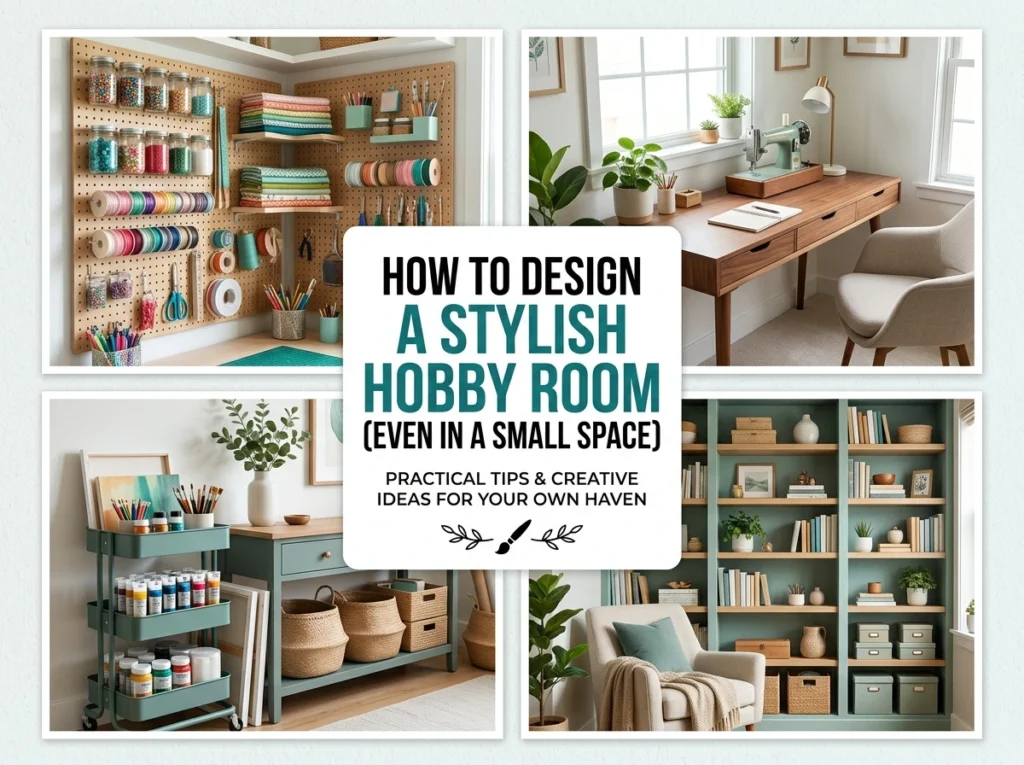
You do not need a big house to have a lovely hobby space. A small corner, planned with love, can hold your art, your crafts, your books, or your music. The trick is not more space. The trick is smart use of the space you have.
In this guide, you will learn how to design a stylish hobby room, even in a small space. We will go step by step: pick the right corner, store things in a smart way, choose the right desk and light, and make the space feel like you. Take the ideas that fit your home, and start with just one corner today.
1. Choose the Right Corner
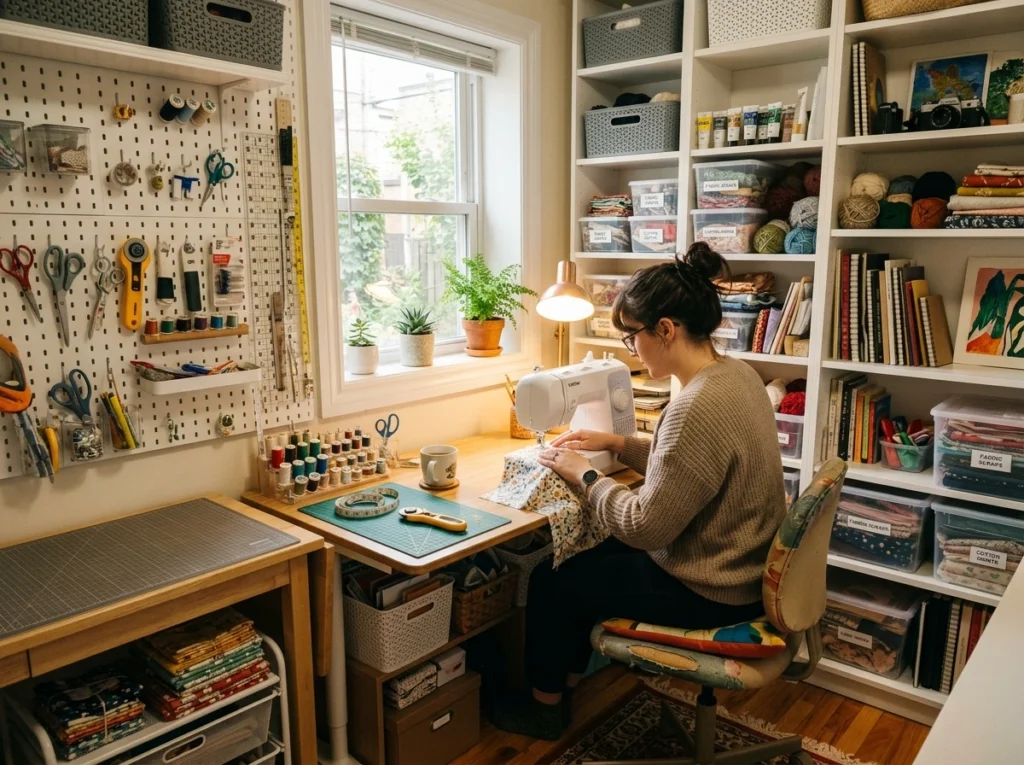
You do not need a whole room. A quiet corner in your bedroom works well. Pick a spot with good light and room to work. Keep the area free of clutter. A small corner can be your favorite spot.
Think about when you will use the space. If you paint or draw, a corner near a window is gold. If you sew or use a machine, pick a corner near a power point. Keep the corner away from the busy, noisy parts of the home if you can. A calm corner helps you start fast, because everything is already in one place and you do not waste time setting up.
2. Use Smart Storage
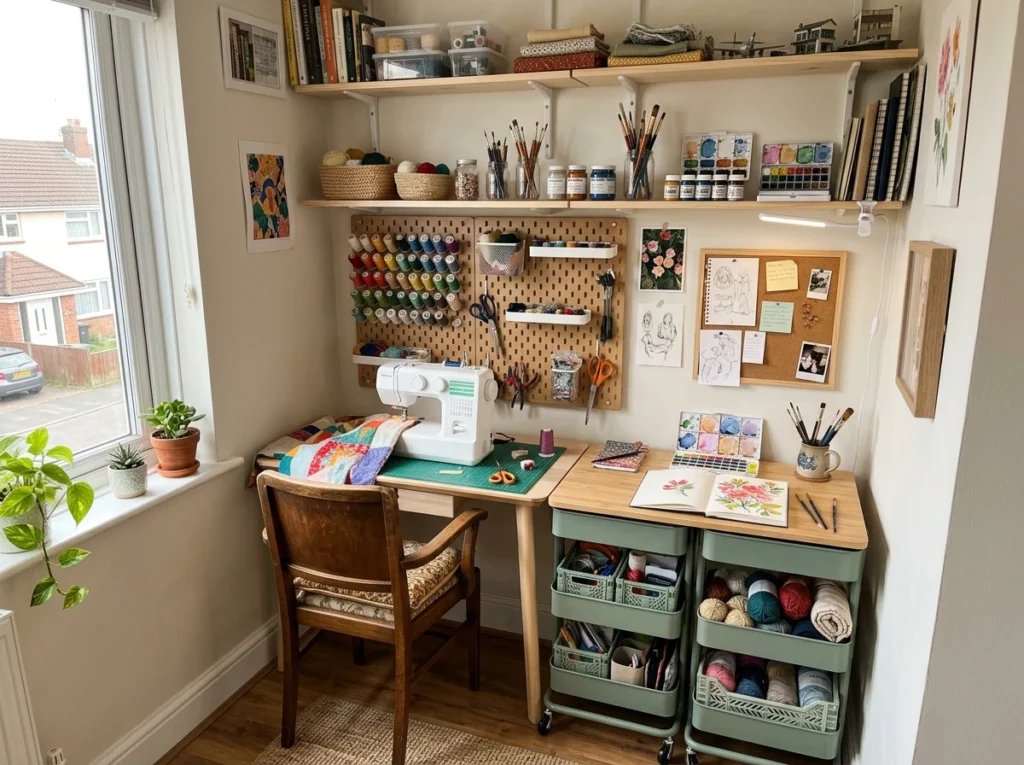
Good storage keeps your room clean and tidy. Use shelves, baskets, drawers, or boxes for supplies. Label all things so you find them fast. Tall storage saves room in small spaces. A tidy room makes every project more fun.
Clear boxes are a smart buy, because you can see what is inside without opening them. Put the things you use most at hand level, and heavy things down low. Use the wall, not just the floor — shelves and hooks take storage up and free your work space. Once a month, spend ten minutes putting things back where they belong. A small tidy-up stops the big mess before it starts.
3. Pick a Comfortable Desk and Chair
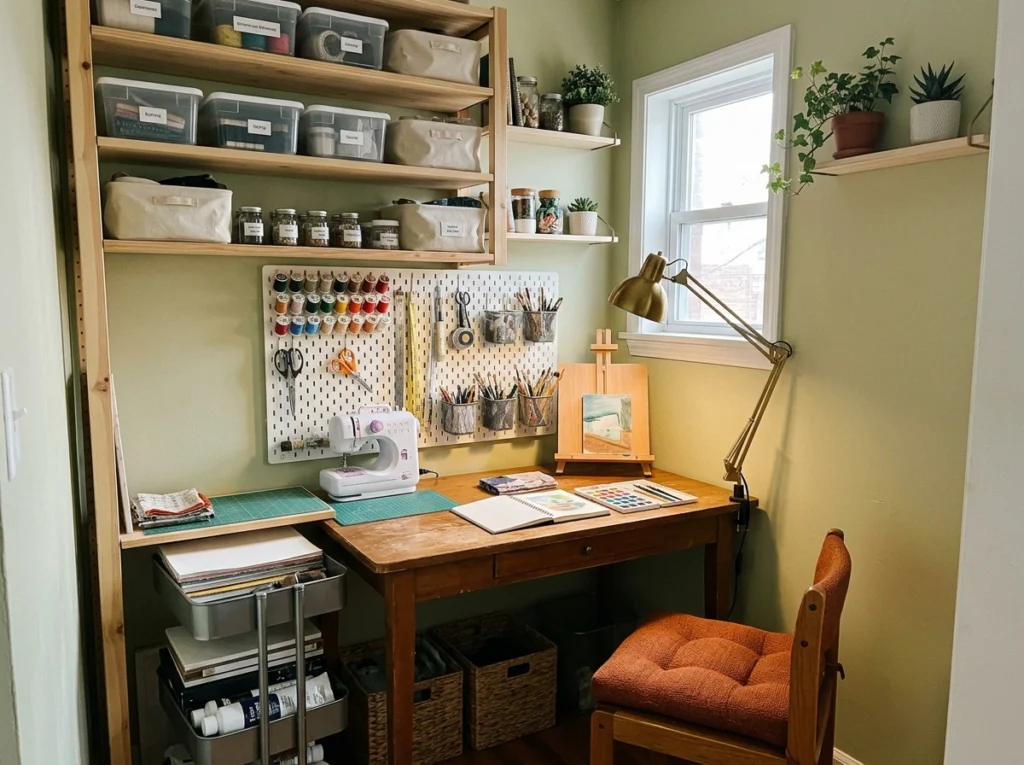
Pick a desk that fits without crowding the room. A comfy chair helps you work for longer. Choose furniture with built-in storage if you can. This gives extra room for your supplies. Comfort matters just as much as style.
Measure your corner before you buy anything. A small desk that fits well is better than a big desk that eats the room. Your chair should let your feet rest flat on the floor, and your back should feel held. If you sit for long hours, a cushion is a cheap and kind upgrade. Keep a small gap between the desk and the wall for cords and air.
4. Add Good Lighting
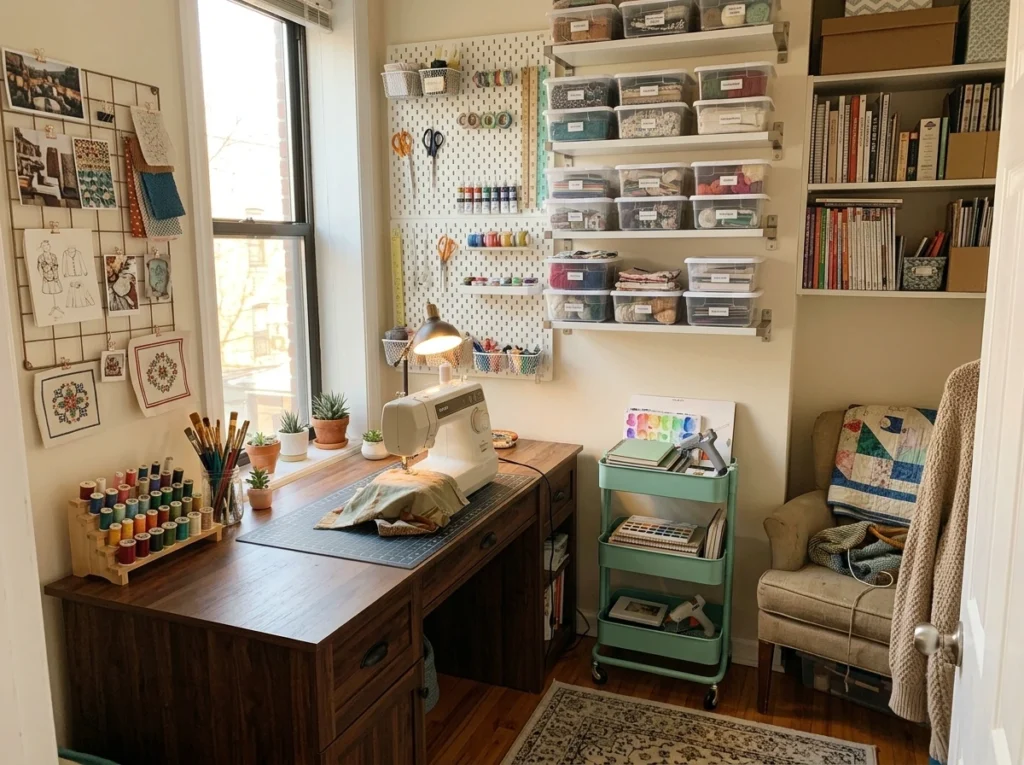
Bright light makes hobby work much easier. Put your desk near a window for daylight. Add a desk lamp for dark evenings. Good light shows colors and tiny details well. It also makes the room feel warm.
If your corner has no window, do not worry. A good lamp can do the job. Pick a lamp with a clean, white light, close to daylight, so colors look true. Put the lamp on the side opposite your working hand, so your hand does not throw a shadow on your work. In the evening, a warm second light makes the corner feel cozy, so you enjoy staying there longer.
5. Decorate with Your Favorite Colors
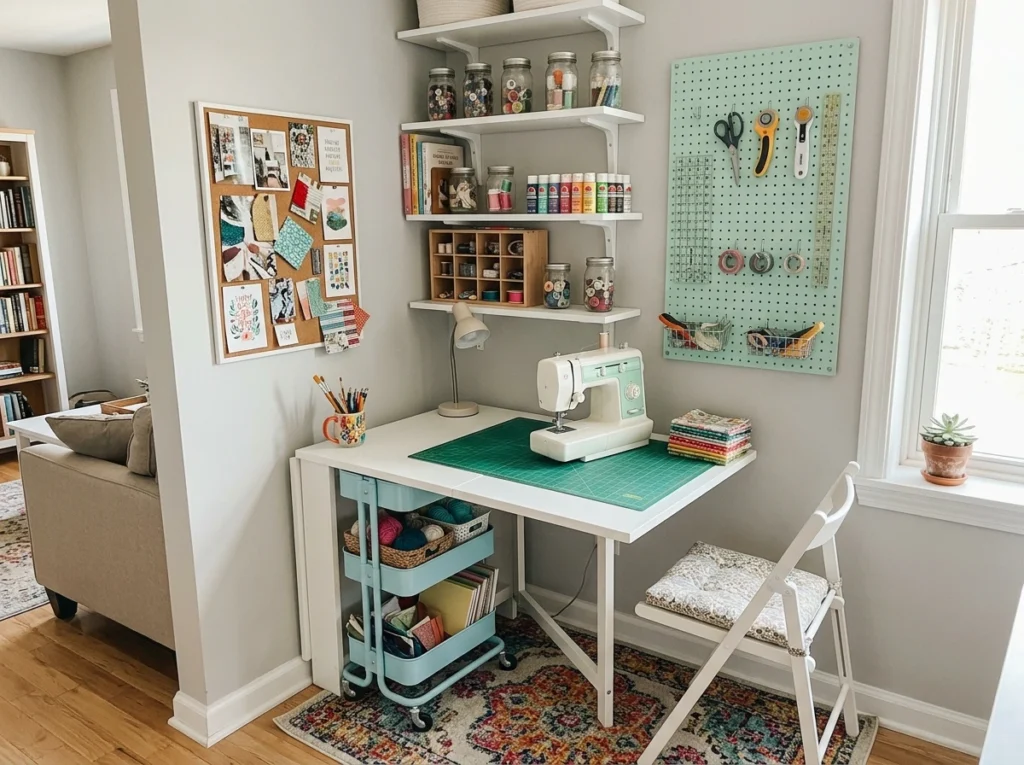
Pick colors that make you feel happy. Soft colors feel calm, bright colors add energy. Add art, plants, or decor that match your style. Keep the design simple, not crowded. Small personal touches make the room special.
Colors change how a room feels more than costly decor does. If your hobby needs focus, like writing or study, soft blue and green help the mind rest. If your hobby is art or crafts, warm colors like soft yellow can lift your energy. Test a color on a small card first and look at it in day and night light. Paint just one wall if you want a change that is cheap and fast.
6. Keep Your Supplies Easy to Reach
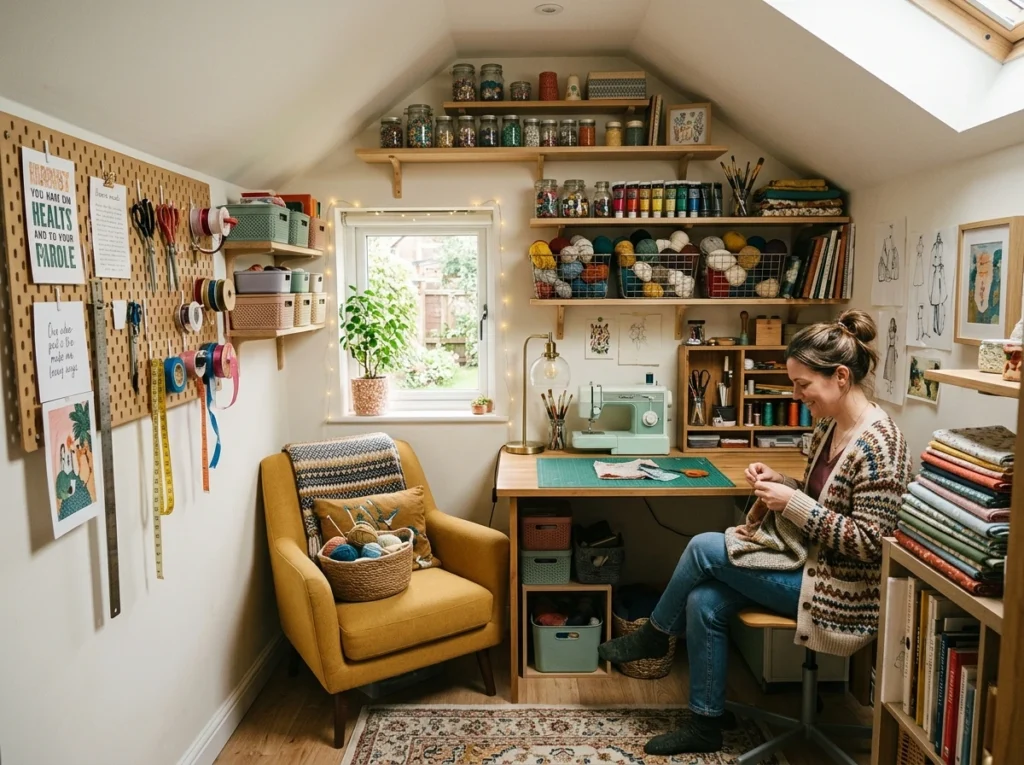
Keep your top tools where you can grab them. Use jars and boxes to keep things neat. This saves time and keeps you focused. A tidy desk feels calm and relaxing. It also makes cleanup much faster.
Think in zones, even in one small corner. One box or jar for each job: one for cutting tools, one for colors, one for paper. When a tool has a home, putting it back takes two seconds. Keep a small tray on the desk for the project you are working on right now. When you finish for the day, the tray holds everything safely, and tomorrow you can start again in one minute.
7. Use Multi-Purpose Furniture
Furniture with two jobs is perfect for small rooms. Pick a desk with drawers or a storage bench. Folding tables are a great pick too. These save space without losing comfort. They make your hobby room more useful.
A folding chair, a desk on wheels, or a stool that opens into storage all work hard in a small room. A bench can be a seat, a shelf, and a box at the same time. When guests come, folding pieces can move away in minutes and your hobby corner turns back into a normal room. This is the true secret of small-space living: every piece should do two jobs.
8. Make the Space Your Own
Add decor that shows your hobbies and style. Display finished crafts, loved books, or fun quotes. Keep the room clean and set up your way. Your hobby room should be fun to use daily. A small space can be a lovely creative hideout.
Your hobby room should make you happy the moment you look at it. Hang one finished piece that you are proud of. Add a small plant, a photo, or a line you love on the wall. Keep it personal, but do not fill every inch — a little empty space lets your eyes rest. When the corner feels like yours, you will come back to it every day, and that is how hobbies grow.
A Simple Plan to Start This Weekend
- Pick your corner and clear it fully.
- Measure the space and write the numbers down.
- Choose your desk and chair, or use what you already have.
- Add storage boxes and put every supply in its home.
- Set your lamp and test the light in the evening.
- Add one pretty thing that makes you smile.
- Sit down and enjoy your hobby for one full hour.
Common Mistakes in Small Hobby Rooms
Mistake 1: Buying furniture before measuring. A desk that is too big makes the whole room feel tight. Fix: measure first, buy second.
Mistake 2: Keeping every supply out on the desk. A full desk leaves no room to work. Fix: only the current project stays out; the rest lives in boxes and drawers.
Mistake 3: Forgetting the light. Weak light tires your eyes and ruins colors. Fix: add a good lamp before you buy any decor.
Mistake 4: Copying a photo from the internet without thinking of your hobby. A music corner and a painting corner need different things. Fix: plan for your hobby first, looks second.
Questions People Ask About Small Hobby Rooms
How much money do I need to make a hobby room? Very little. You can start with a desk and chair you already own, a few boxes, and one good lamp. Add nicer things slowly, one by one.
My room is really tiny. Can this still work? Yes. A corner of one metre by one metre is enough for many hobbies. Use the wall for shelves and pick folding furniture.
How do I keep the space tidy? Give every tool a home, and spend two minutes putting things back when you finish. Small daily habits beat one big clean-up.
Can one corner serve two hobbies? Yes. Use two boxes, one for each hobby. Keep only one hobby out at a time, and the corner will stay calm and clean.
How to Keep Your Hobby Room Clean Without Hard Work
A tidy hobby room is not made in one big clean-up day. It is made by tiny habits that take almost no time. When you pick up a tool, put the last one back first. When you open a box, close it before you walk away. Keep a small bin in the corner so paper bits and cuttings never reach the floor.
Once a week, do a five-minute reset: clear the desk, put every supply in its home, and wipe the table. Once a month, look at your supplies with honest eyes. If you have not used something for a year, give it away or move it out of your prime space. Your best tools deserve the best spots. A clean corner is not just pretty — it makes you want to sit down and create, and that is the whole point of the room.
Best Colors for a Calm and Happy Hobby Space
If you feel stuck on colors, here is a simple way to choose. Look at the hobby itself. For calm hobbies like reading, knitting, or writing, soft colors work best: pale blue, sage green, warm white, and light wood. For lively hobbies like painting, dance practice, or kids’ crafts, you can add one bright color — a sunny yellow chair, a coral box, or a fun rug. Keep the big things soft and the small things bright. That way, the room feels happy but never loud, and you can change the mood any time by swapping the small pieces.
Final Words
A hobby room is not about size. It is about a small place that is yours, where your tools wait for you and your mind can rest. Pick your corner, plan it with these easy steps, and make it pretty in your own way. Your small space can do big things.
More Ideas You’ll Love
- How to Style Classy Outfit for Women Over 50: 21 Stylish Outfit Ideas for Mature Women
- How to Wear Cowboy Boots: 13 Stylish Outfit Ideas You’ll Love
- 13 Small Gift Basket Ideas That Look Expensive (But Aren’t)
Stay Updated
Subscribe with your email and get notified whenever we publish new posts.