
Timeless Glamour: 20 Art Deco Living Room Ideas to Elevate Your Home

The Art Deco movement, which flourished in the 1920s and 30s, remains the gold standard for interior sophistication. Characterized by bold geometric shapes, rich materials, and an unapologetic sense of luxury, it’s a style that transforms a standard living room into a cinematic experience. Whether you want to go full “Great Gatsby” or simply sprinkle a few metallic accents into a modern space, these 20 ideas will help you master the art of Art Deco.
1. Geometric Patterns

Geometry is the heartbeat of Art Deco. Unlike the flowing, organic lines of Art Nouveau, Deco focuses on sharp angles, chevrons, and stepped forms.
- Wallpaper: Opt for metallic-foiled wallpapers with repetitive fan or honeycomb motifs.
- Flooring: Use parquet wood flooring in a herringbone or chevron layout to ground the room with structural interest.
- Textiles: Incorporate throw pillows with embroidered zigzag patterns to add a subtle nod to the era.
2. Velvet Upholstery
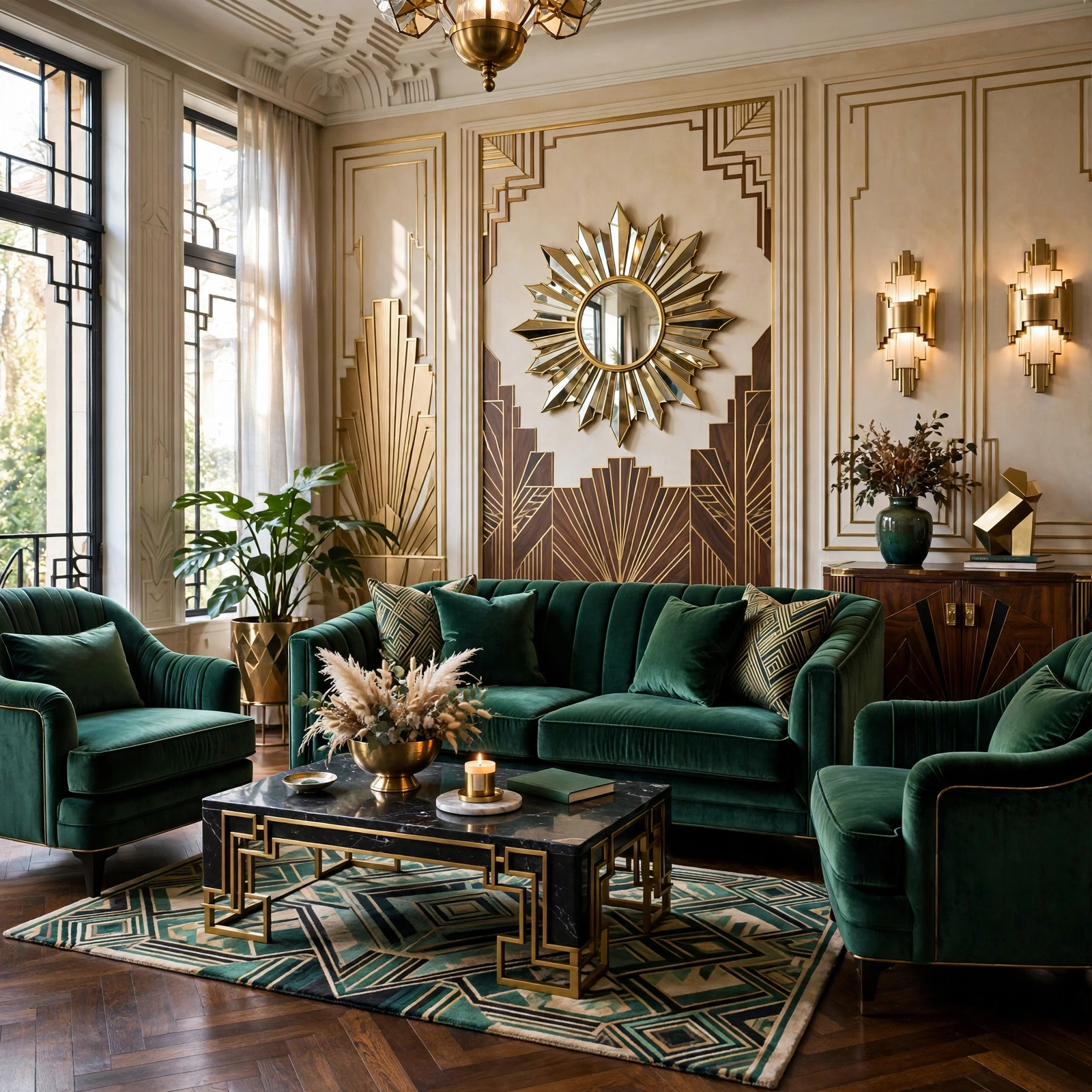
Art Deco is nothing without tactile luxury. Velvet is the quintessential fabric of the era, offering a soft texture that contrasts beautifully against hard metallic surfaces.
- Colors: Choose deep, saturated tones like emerald green, royal blue, or burnt orange.
- Style: Look for “channel tufting”—vertical stitched lines—which adds height and a sense of rhythm to your furniture.
- Durability: Modern performance velvets offer the look of the 1920s with the durability needed for a contemporary home.
3. Gilded Accents

Gold, brass, and chrome are the “jewelry” of an Art Deco room. These reflective surfaces catch the light and create a sense of opulence.
- Furniture Frames: Look for coffee tables or side chairs with slim, gold-finished metal frames.
- Hardware: Swap out standard drawer pulls or door handles for brass hardware in sunburst or stepped shapes.
- Mixing Metals: While gold is traditional, mixing it with chrome can create a “Streamline Moderne” look that feels more industrial and cool.
4. Sunburst Mirrors

The sunburst is perhaps the most iconic motif of the Art Deco period, symbolizing the optimism and energy of the early 20th century.
- Focal Point: Hang a large sunburst mirror over a fireplace or sofa to act as the room’s centerpiece.
- Groupings: Create a “gallery wall” of smaller sunburst mirrors in different metallic finishes for a more eclectic take.
- Material: Look for hand-carved wood frames or antique brass finishes to add an authentic vintage feel.
5. Jewel Tones

While early Art Deco used a lot of black and gold, the movement eventually embraced a vivid palette of jewel tones.
- The Palette: Think emerald, sapphire, ruby, and amethyst.
- Contrast: Pair these heavy colors with neutral “bridge” colors like cream, taupe, or charcoal to prevent the room from feeling too dark.
- Walls: If you’re feeling bold, paint a single accent wall in a deep navy to make your gold accents pop.
6. Mirrored Furniture

Mirrored surfaces were a hallmark of the 1930s, used to make rooms appear larger and more glamorous.
- Sideboards: A mirrored buffet or credenza can hide clutter while adding a high-end, reflective quality to the space.
- Light Reflection: Place mirrored furniture opposite windows to bounce natural light throughout the room.
- Maintenance: Keep a glass cleaner handy; the only downside to this look is that it shows fingerprints!
7. Statement Chandeliers

In an Art Deco living room, the lighting is a piece of art itself. Skip the basic flush mounts for something grand and tiered.
- Tiers: Look for “Ziggurat” shapes—chandeliers that get narrower as they go down.
- Materials: Glass rods, crystals, and frosted globes are all period-appropriate.
- Scale: Don’t be afraid to go big. A large chandelier helps define the “seating zone” in an open-concept living area.
8. Exotic Woods

The Art Deco era coincided with a fascination for exotic materials. Rare, highly grained woods were prized for their natural patterns.
- Species: Look for Macassar ebony, walnut burl, or rosewood.
- Finishes: These woods should always be finished with a high-gloss lacquer to highlight the “flame” or “burl” of the grain.
- Inlays: Many authentic pieces feature marquetry—inlays of different woods or mother-of-pearl—to create geometric designs.
9. Curved Furniture

While the architecture of the time was angular, the furniture often featured soft, sweeping curves inspired by the “Streamline Moderne” sub-style.
- Club Chairs: The classic oversized, rounded club chair is a staple of Deco comfort.
- Kidney Sofas: These bean-shaped or curved sofas encourage conversation and break up the harsh lines of a rectangular room.
- Rug Shapes: Use a large circular rug to echo the curves of your seating.
10. Animal Prints

Art Deco often drew inspiration from “exotic” locales, leading to the frequent use of animal motifs and skins.
- Zebra and Leopard: Use these sparingly as rugs or throw pillows to add a wild, adventurous edge to the room.
- Subtlety: If real patterns feel too loud, look for embossed leathers that mimic crocodile or shagreen (stingray) skin.
- Faux Options: High-quality faux furs and prints offer the same luxury without the ethical concerns of the original era.
11. Symmetric Layouts
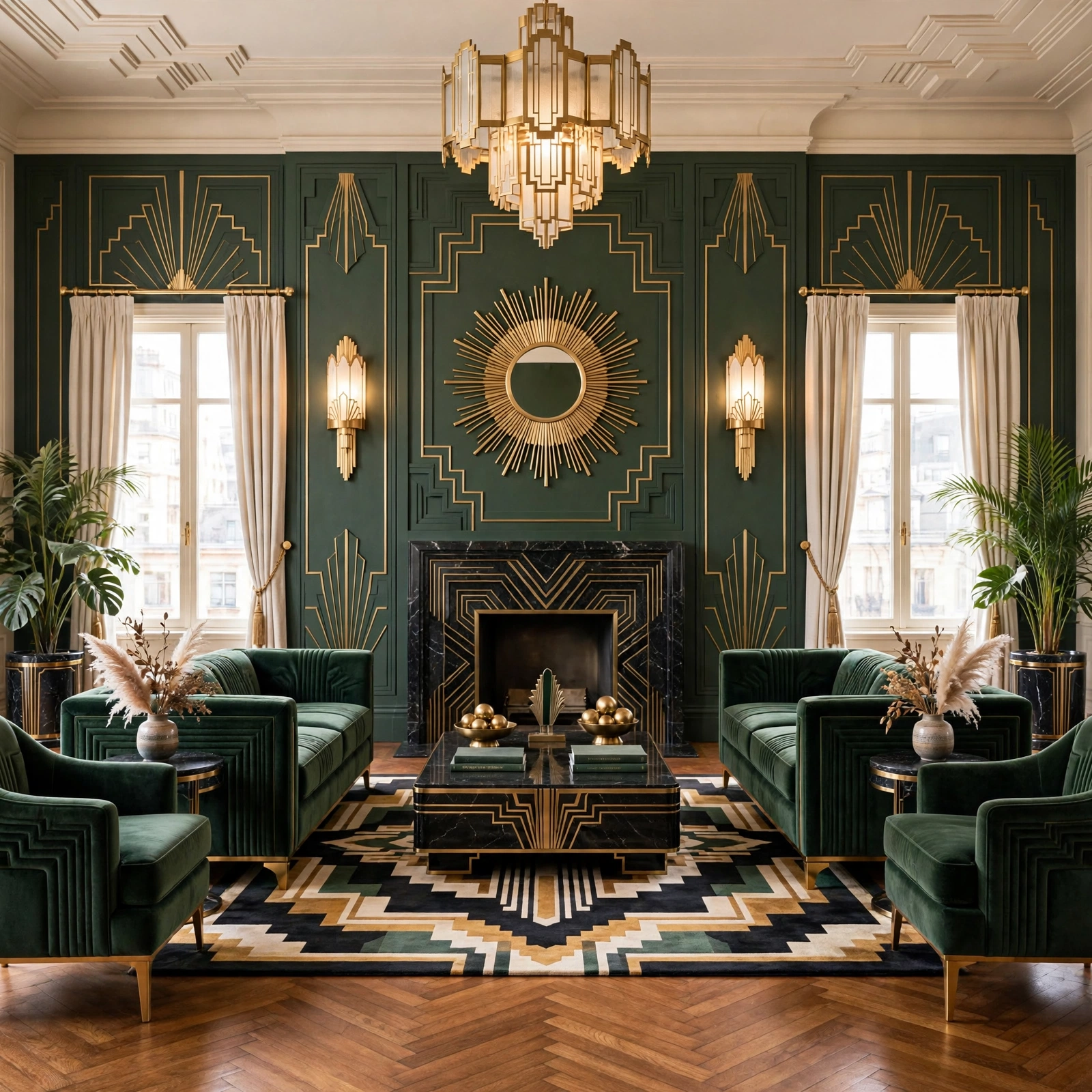
Art Deco design is rooted in order and balance. A symmetrical layout creates a sense of formality and calm.
- Pairing Up: Use pairs of everything—two armchairs, two matching lamps, or two identical side tables.
- The Centerline: Find a central axis (usually the fireplace or a large window) and build your furniture arrangement outwards from that point.
- Visual Weight: Ensure the visual weight is distributed evenly so the room feels anchored.
12. High-Gloss Finishes

Everything in an Art Deco room should shine. Lacquered surfaces provide a mirror-like finish that screams high-end luxury.
- Cabinetry: Choose black or deep red lacquer for a dramatic statement piece.
- Ceilings: For a truly daring look, use a high-gloss paint on the ceiling to reflect the light from your chandelier.
- Polished Stone: Polished granite or marble surfaces contribute to this slick, reflective aesthetic.
13. Marble Accents

Marble was the stone of choice for the 1920s elite. It provides a cool, hard contrast to the warm velvets and woods.
- Fireplaces: A marble-surround fireplace with a stepped mantel is a quintessential Deco feature.
- Coffee Tables: Solid marble plinth tables are currently trending and fit perfectly into this aesthetic.
- Trays: If a large piece is out of budget, use marble coasters or a marble serving tray on your ottoman.
14. Art Deco Wall Art

The art of this period was distinctive, featuring stylized figures, streamlined machines, and bold, flat colors.
- Tamara de Lempicka: Look for prints inspired by this famous artist, known for her “soft cubism” and glamorous portraits.
- Travel Posters: Vintage-style travel posters for places like Paris, Monaco, or New York from the 1930s add a nostalgic touch.
- Sculptures: Bronze statues of dancers or greyhounds are classic Art Deco shelf fillers.
15. Metallic Wallpapers

If you want the walls to do the heavy lifting, metallic wallpaper is the way to go.
- Silver and Chrome: Great for a cooler, more modern “Hollywood Regency” vibe.
- Gold and Copper: Perfect for a warm, cozy, yet expensive-looking lounge feel.
- Texture: Look for “grasscloth” wallpapers that have metallic threads woven through them for a sophisticated, tactile look.
16. Tiered Designs

The “Ziggurat” or stepped pyramid shape is a recurring architectural theme in Art Deco (think the top of the Chrysler Building).
- Shelving: Use tiered bookcases or display units to house your collection of vintage glassware.
- Molding: Add stepped crown molding to your ceiling to draw the eye upward and add architectural depth.
- Baseboards: Even simple baseboards can be updated with a “stepped” profile to reinforce the theme.
17. Inlaid Details

Attention to detail is what separates a good Deco room from a great one. Inlays add a level of craftsmanship that feels bespoke.
- Materials: Look for furniture featuring bone, mother-of-pearl, or ivory (faux) inlays.
- Patterns: Starbursts, fans, and simple lines of contrasting wood (marquetry) are common.
- DIY: You can achieve a similar look by using metallic paint pens to draw thin “inlay” lines on plain wooden furniture.
18. Architectural Moldings

Texture doesn’t just come from fabrics; it can come from the walls themselves.
- Fluting: Fluted panels (vertical half-circles) were incredibly popular and are making a massive comeback today.
- Reeding: Similar to fluting but with outward-facing ridges, reeding can be applied to cabinet doors or kitchen islands.
- Wainscoting: Use simple geometric frames on the lower half of your walls to add a sense of history to a new build.
19. Sculptural Seating
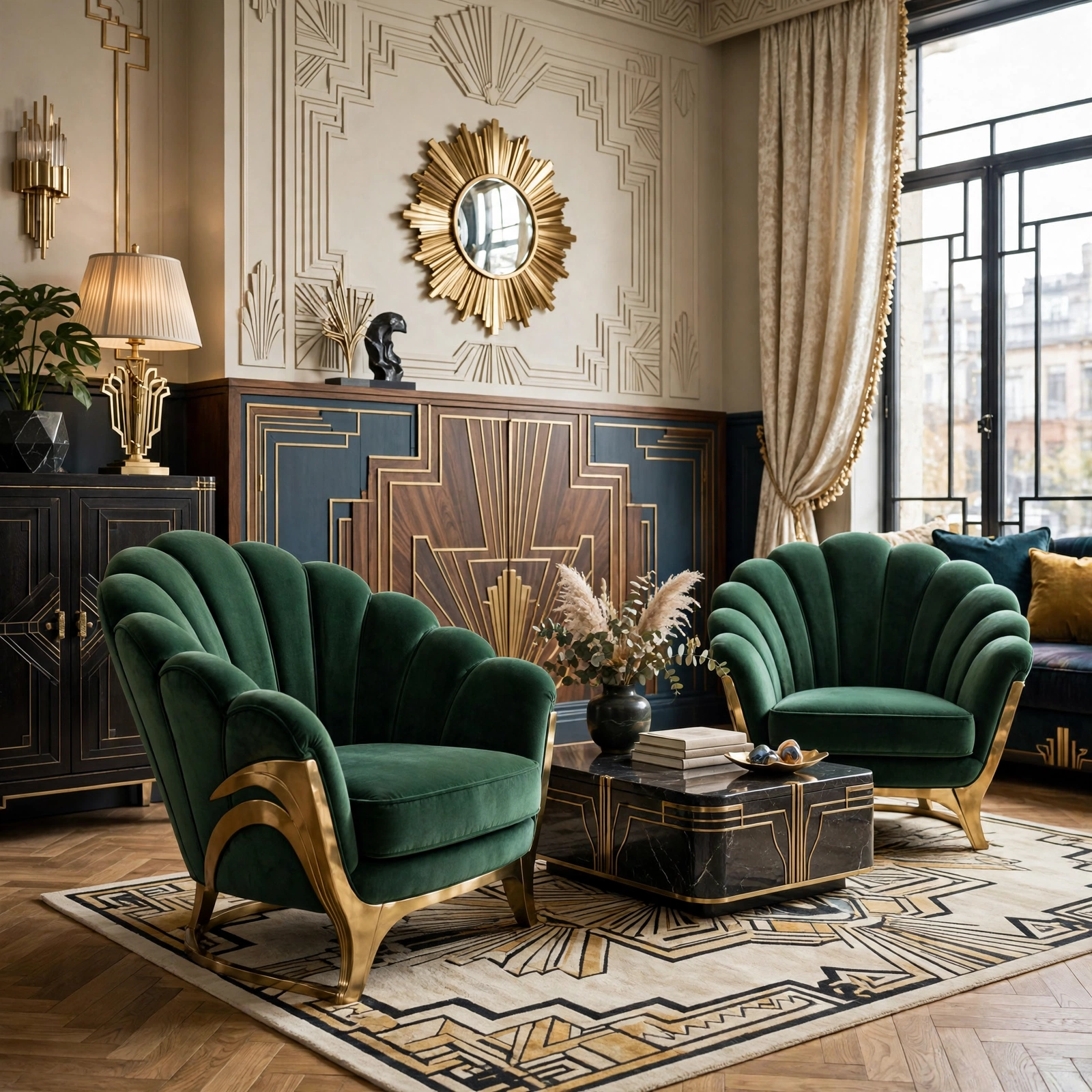
In an Art Deco living room, your chairs shouldn’t just be comfortable; they should be conversation pieces.
- Scallop Backs: Armchairs that look like blooming flowers or seashells were a favorite in 1920s French salons.
- Tub Chairs: Compact, circular tub chairs are perfect for creating a cozy reading nook within a larger living space.
- Asymmetry: While the room layout is symmetrical, an occasional chair with an asymmetrical back can add a touch of modern avant-garde flair.
20. Layered Lighting
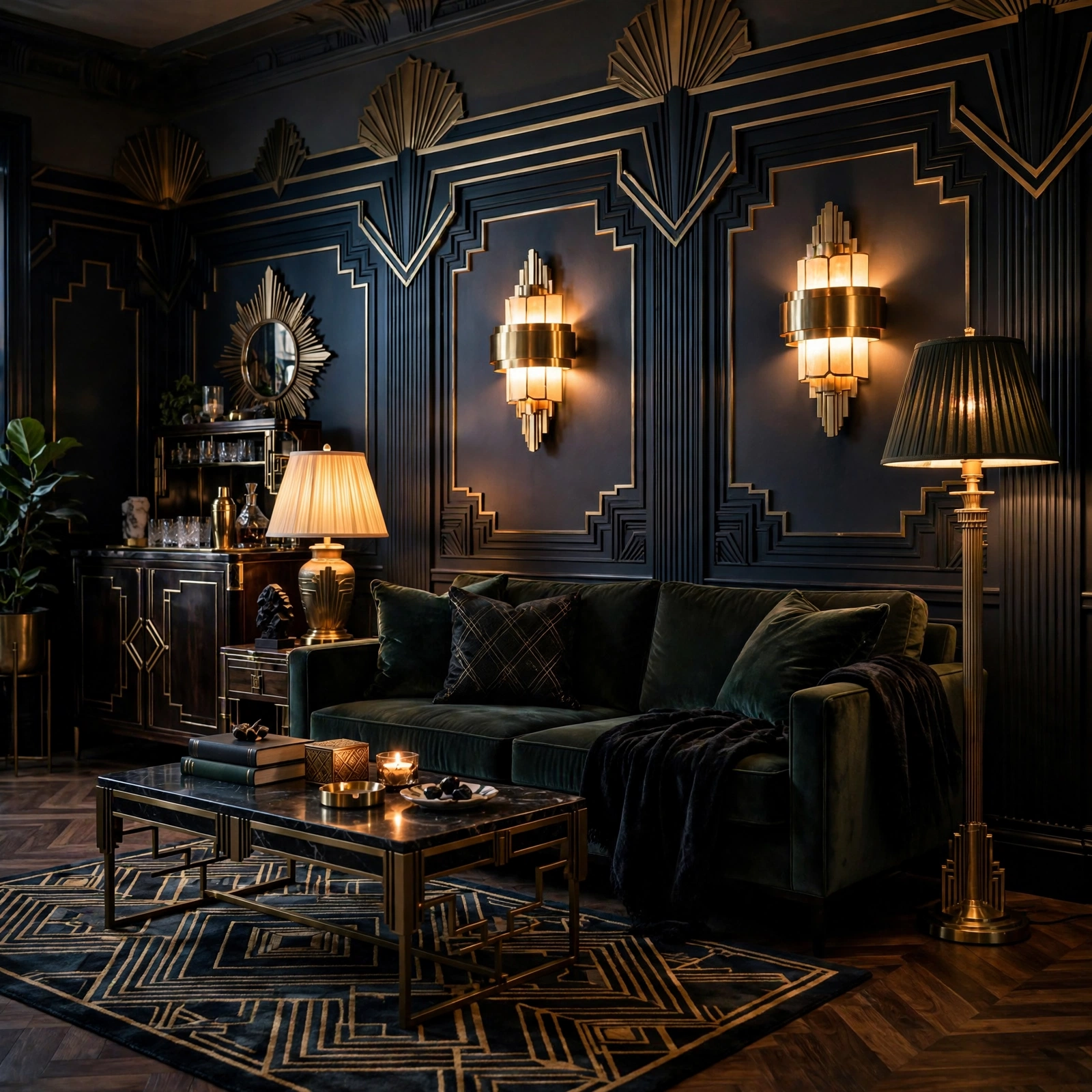
Art Deco is all about mood. You cannot achieve the right atmosphere with a single overhead light.
- Wall Sconces: Install fan-shaped or torch-style sconces on either side of a mirror or fireplace.
- Floor Lamps: Look for lamps with opaque glass globes or “Skyscraper” style shades.
- Task Lighting: A classic “Banker’s Lamp” with a green glass shade adds a touch of library-chic to a side table.
Stay Updated
Subscribe with your email and get notified whenever we publish new posts.